Data Strategy Redefined
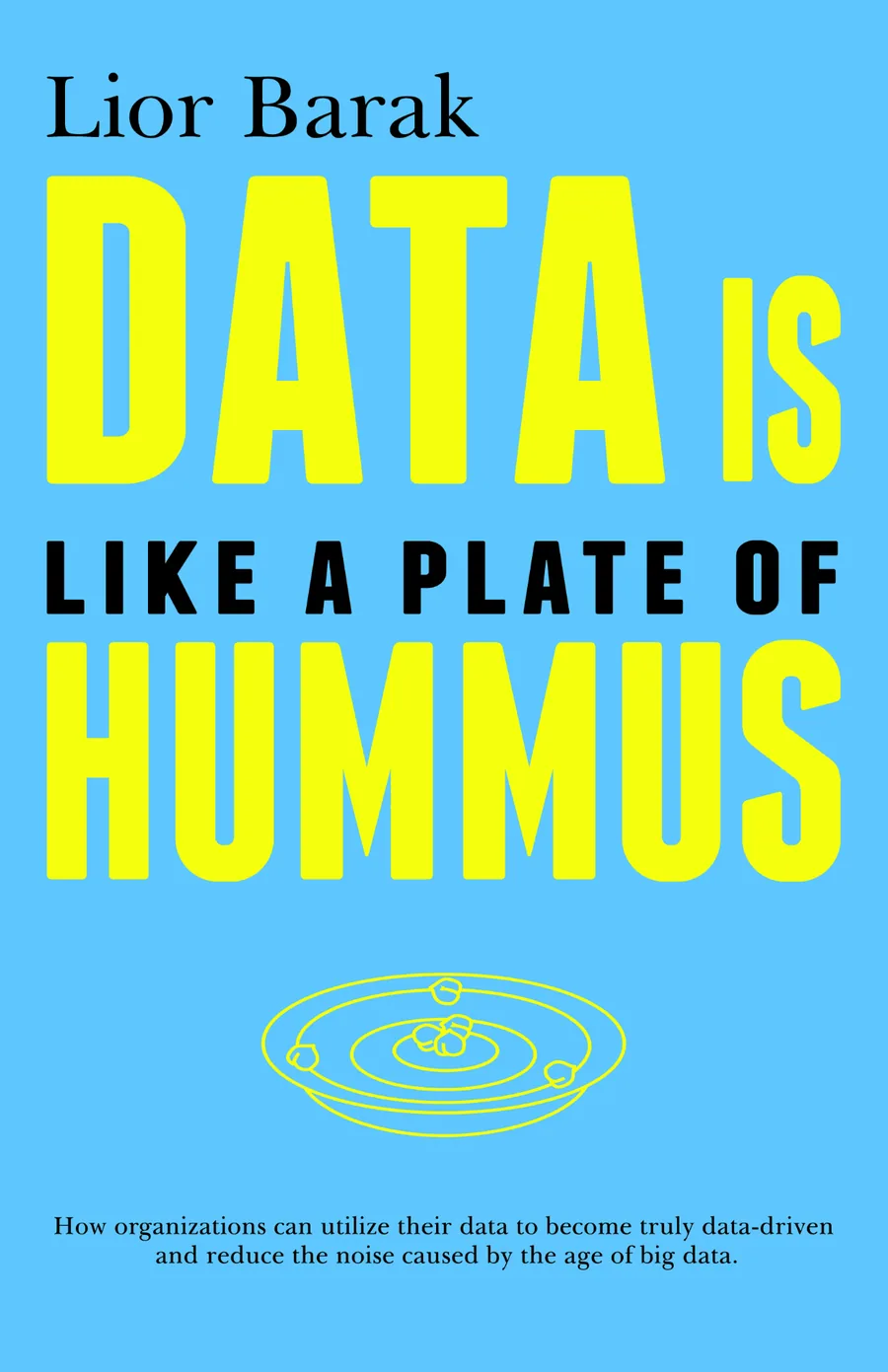
Data is Like
a Plate of
Hummus.
Stop Chasing Data & Fighting Noise.
Written for marketers, product managers, and engineers who are tired of collecting data and ready to actually use it. The difference between data-driven and data-centric? One collects. The other cooks.
The Central Idea
What does hummus have to do with data?
More than you'd think. Hummus is a foundation, with simple ingredients, but the result depends entirely on how you combine them. Use the wrong ratio, and it's bland. Overthink the toppings, and nobody can taste the base. Skip the recipe altogether, and you've got a bowl of mush. Data works the same way.
When Lior moved to Berlin, he started making hummus to remind him of home. Hundreds of batches, obsessive tracking of what worked, constant feedback from friends. At some point, he realized: this is exactly what a good data team does. Iterate. Measure. Strip away what doesn't serve the dish.
The Origin Story
A book born from real chaos
This isn't a theory book. It's the distilled experience of years spent inside struggling data teams, watching smart people drown in noise.
The Spark at Lovoo
Lior joins the analytics team and meets Gerrit, Bri, and Lore on the performance team. One question echoes every morning: "WHERE IS MY DATA?" The gap between data providers and data consumers becomes impossible to ignore.
The No Excel Policy
The team is wasting 40% of their days downloading CSV files, running VLookups, fixing errors. Lior introduces Tableau and bans Excel. The team gains hours of their day back, and starts making real decisions.
The Workshop Is Born
After years of running into the same problems in every organization, Lior begins designing the Data Discovery Workshop. A structured 4-hour session for cutting through data noise and building real data strategy.
Berlin. Family. A Book.
With his partner holding down the fort at home, Lior finally has the time to write it all down. Every framework. Every lesson. Every kitchen metaphor. The manuscript takes shape in Berlin.
Published
Edited by Sarah Mayor and designed by Diana Toma, Data is Like a Plate of Hummus is released. It lands with a 5-star reception from data engineers, product managers, and marketing directors who finally feel understood.
What's Inside
Six principles that will change how your team uses data
Stop drowning in dashboards. Stop fighting noise. Start making faster, cleaner, smarter decisions.
Data Strategy, Not Just Data
Know exactly what you need, why you need it, and how it drives decisions. A clear roadmap for analysis keeps you effective and focused.
Own Your Data
Keeping leads private is paramount. Stop giving your customer gold away to third parties. Push strategy, not pull. What you share is a business decision.
Become User-Focused
Put the end-user at the center of your data design. GDPR isn't just compliance, it's an opportunity to build real trust with the people who use your product.
Become Data-Centric
What can't be tracked, can't be measured. Three KPIs for daily decisions. Ten for weekly review. No more, no less. Focus is a strategy.
QA Your Data
Garbage in, garbage out. The book shows you how to build simple automated quality checks that restore team trust, before Excel returns.
Reflect to Improve
Weekly reviews, monthly strategy sessions, quarterly workshops. Build cycles of learning that compound, like a recipe refined over thousands of batches.
Inside the Book
From chickpea to decision-making machine
Every chapter is a layer. Just like hummus.
Reader Reviews
What people are saying
"Finally, a book that makes data strategy digestible! The hummus metaphor runs perfectly throughout. You'd think it would get old, but it keeps clicking in new ways. Now required reading for my entire team."
"I never thought I'd laugh while learning about data strategy. Insightful and genuinely entertaining. The workshop section alone is worth the price of the book."
"As a product manager, this is a 10/10 and absolutely worth buying. Anyone who understands the value of data (which should be everyone) should read this book."
"I loved the book. It is so clear on such a confusing topic. Made a lot of sense to me, and the hummus examples are pure gold!"
"Lior's book took me into a world I never thought about. Working with marketing teams was always a challenge. With this book I discovered how to work with them on data strategy and push communication to a new level."
"Lior Barak synthesizes the complexities of data manipulation into ideas that are easy to consume and implement. Applicable to organizations of all sizes and types."
A Gift from the Author
The actual hummus recipe from the book
Because Lior ends the book with it. And he's serious about the baking powder.
Lior's Homemade Hummus
Tested, refined, and Berlin-approved.
🫙 Ingredients
- •500g dry chickpeas
- •1 carrot
- •1 small onion
- •2 tsp baking powder
- •5–7 cloves of garlic
- •25g parsley, roughly chopped
- •Tahini (⅓ of total volume)
- •¼ tsp cumin
- •Juice of one lemon
- •Olive oil, to serve
Preparation
- 1.Rinse the chickpeas, place in a large bowl covered with cold water. Soak 12 hours. They will double in size.
- 2.Strain, rinse again, cover with fresh water for another 12 hours. Add half the baking powder. This is the secret to a smooth and creamy texture.
- 3.Add chickpeas to a large pot with the onion, carrot, and 1 clove of garlic. Simmer for one hour.
- 4.Add remaining baking powder. Cook until you can easily mash chickpeas between your fingers.
- 5.Take ⅔ of the chickpeas and cool under ice water. Peel the shell from as many as you can.
- 6.Blend the chickpeas with remaining garlic, adding cooking water until velvety smooth.
- 7.With the blender running, add cumin, parsley, tahini (⅓ tahini to ⅔ chickpeas), and lemon juice. Adjust to taste.
Done reading about data problems?
Time to cook.
Paperback and Kindle on Amazon. Register for free access to the Data Discovery Workshop canvas templates.
Also available on Amazon UK · Kindle Store · The Hummus Club
Looking for the new book? What Data Really Costs is written for CEOs and founders, not teams. liorbarak.com/what-data-really-costs →